JAKARTA, Agung Intiland News - In recent years, the way companies assess investment in industrial estates has undergone significant changes. If previously land prices were the main indicator in determining business locations, now investors are more likely to use the Total Cost of Ownership (TCO) approach to calculate the feasibility of investment in the long term.
These changes are influenced by rising logistics costs, energy prices, and the company's need to speed up production and distribution processes. As a result, investment decisions are no longer based solely on the purchase price of land, but also take into account the operational costs that will arise during the use of the asset.
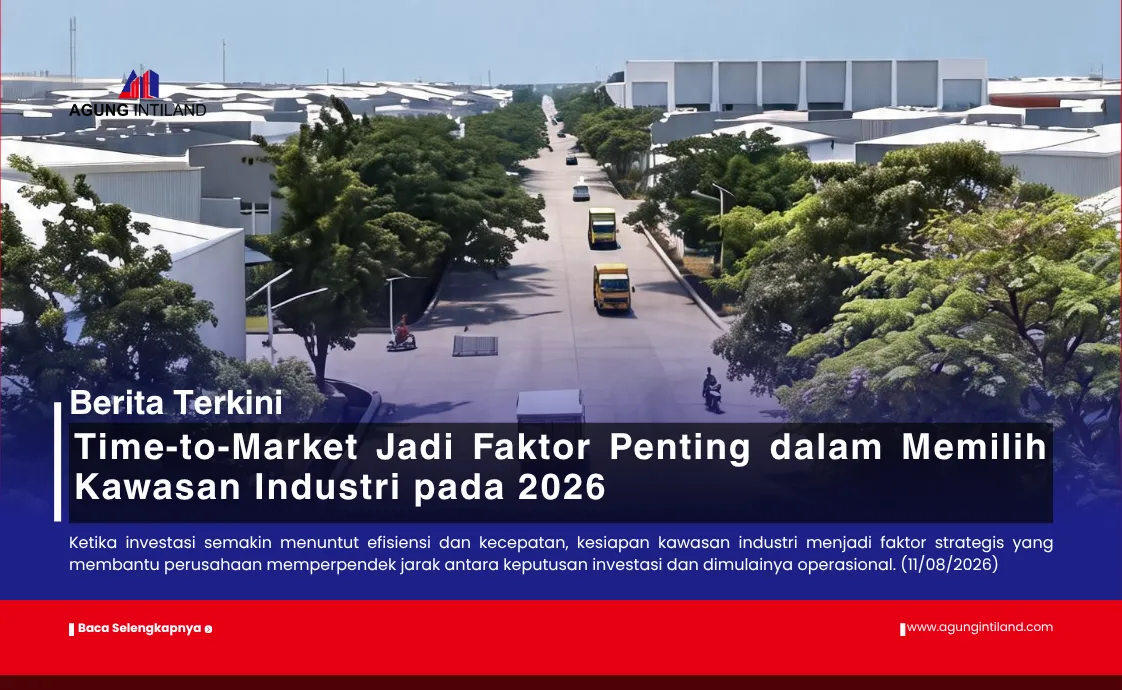
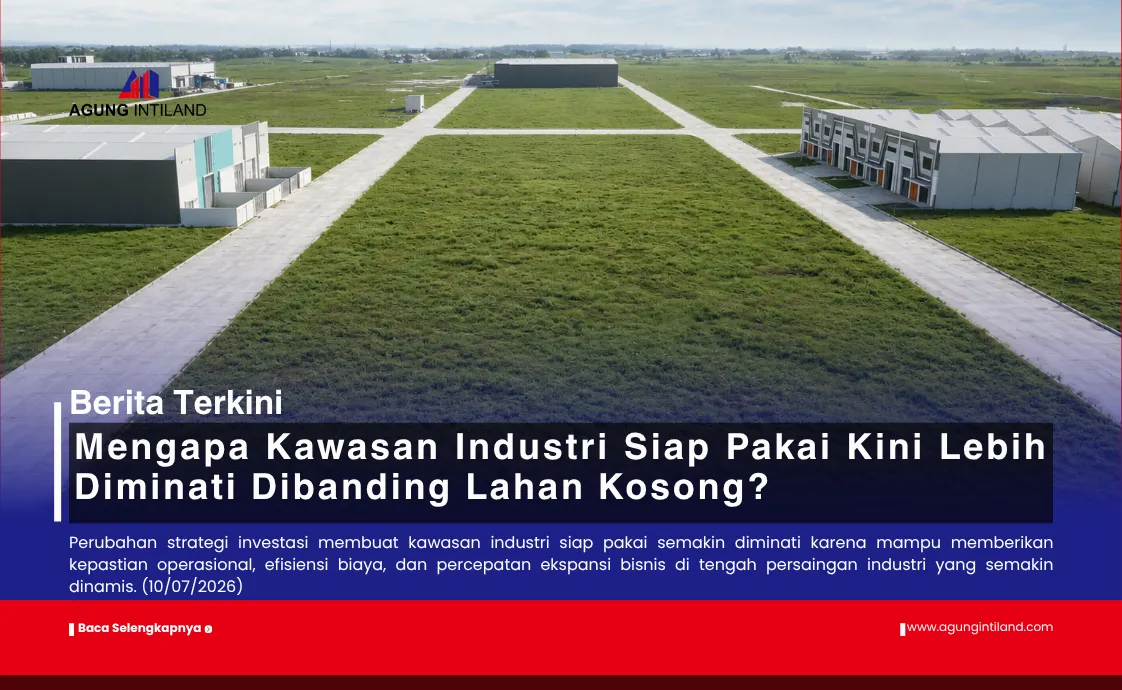
The industrial property market report shows that the demand for industrial estates in Greater Jakarta is still driven by the manufacturing, logistics, data center, and electric vehicle industries. At the same time, investors are increasingly choosing areas that already have complete infrastructure because they are considered to be able to reduce project risks and accelerate the company's operational time. This is in line with the increasing demand for ready-to-use industrial facilities compared to construction from scratch.
In addition to land prices, the company is now starting to calculate the cost of internal infrastructure development, utility provision, licensing management, and the time needed before the facility can generate revenue. The longer the process lasts, the greater the costs that the company must bear, both in the form of construction costs and loss of potential revenue due to operational delays.
The Ministry of Industry also noted that industrial estates in Indonesia have become home to around 11,970 active companies, absorbing 2.35 million workers, and posting investment realization of IDR 6,744.58 trillion. The magnitude of these activities shows that modern industrial estates are increasingly developing as a business ecosystem that is able to support the company's operational efficiency, not just providing industrial land.
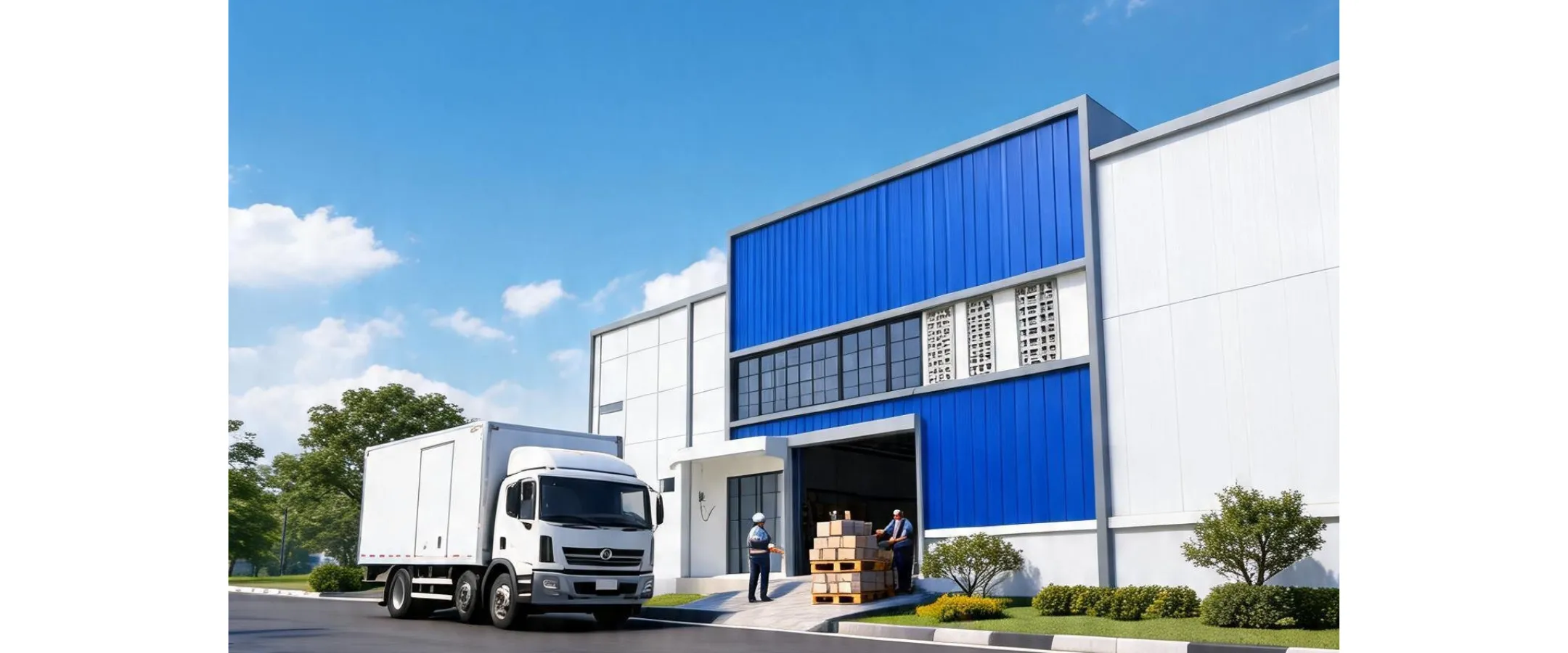
For manufacturing and logistics companies, areas that already have a road network, reliable electricity supply, clean water, waste management systems, and connectivity to toll roads, ports, and airports are considered to be able to reduce daily operational costs. This efficiency can ultimately have an impact on the company's productivity while accelerating the return on investment.
The management of Laksana Business Park considers that the change in the way investors calculate the value of investment is a positive development for the industrial estate sector. According to management representatives, the company is now more focused on the economic value gained during the asset use rather than just chasing a low purchase price.
"Investors are now increasingly paying attention to operational costs throughout the life of the investment. Areas that are able to provide complete infrastructure and efficient logistics access will provide added value because they can help companies optimize productivity from the beginning of operations," said the management representative.
Seeing this trend, industrial estates with mature ecosystems are expected to continue to be the main choice of investors in the second half of 2026. In the midst of increasingly competitive industrial competition, the ability of a region to create long-term efficiency is one of the factors that determine the success of investment. (JP)