JAKARTA, Agung Intiland News — The speed of starting operations is now one of the important considerations in industrial investment decisions. In the midst of increasing investment activities and regional supply chain competition, companies not only calculate land prices, but also how long it takes from the time the investment is made until the facilities can be used for production, storage, and distribution activities.
The time-to-market concept is increasingly relevant because Indonesia's investment activities are still showing positive momentum. The Ministry of Investment and Downstreaming/BKPM noted that investment realization in the first semester of 2026 reached around IDR 1,010.6 trillion, or almost half of this year's national investment target. This achievement shows that the need for locations and facilities that can support business expansion remains open.
In the industrial property sector, market developments also show that investors are increasingly selective in determining locations. Colliers' report for the Greater Jakarta industrial estate market in the first quarter of 2026 noted that market activity is still relatively stable, while demand continues to come from domestic and foreign investors. However, global economic uncertainty makes some investors take longer to make decisions.
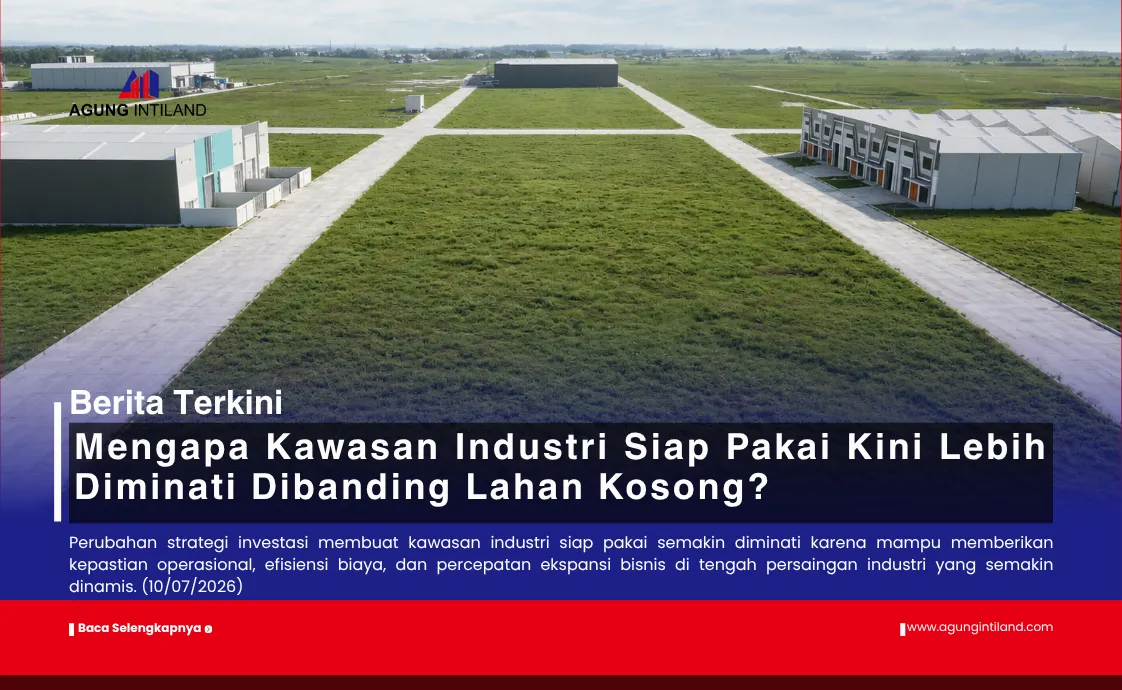
In conditions like this, the readiness of the area can be a differentiating factor. Companies that choose areas with basic infrastructure, utilities, transportation access, and supporting facilities that are already available have the opportunity to reduce the preparation stage before business activities begin. Thus, the time between investment decisions and the start of operations can be reduced.
This urgency is increasingly evident from the size of the industrial ecosystem that has been formed in Indonesia. The Ministry of Industry noted that there are around 11,970 industrial companies operating in industrial estates, with the absorption of around 2.35 million people and the investment collected reaching around Rp6,744.5 trillion. The data shows the scale of the industrial estate as the center of national production and business activities.
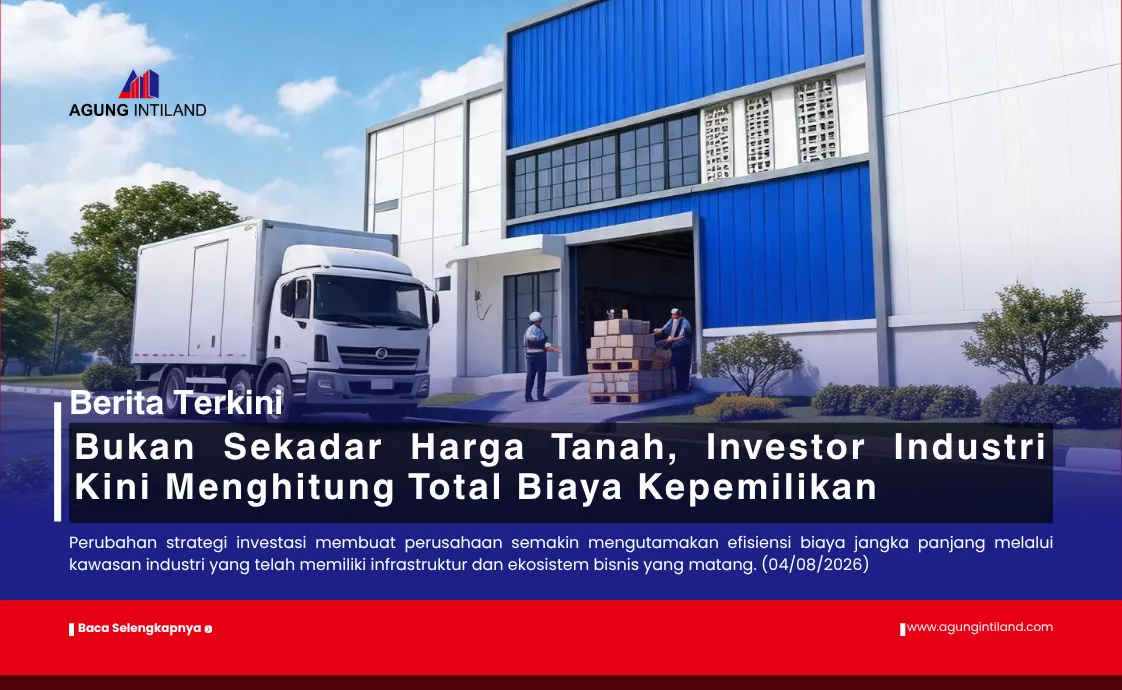
For manufacturing and logistics companies, time also has financial consequences. Facilities that cannot be used mean that the company has not been able to carry out production, store goods, or distribute products optimally. Therefore, the decision to choose an industrial estate began to shift from simply comparing land prices to calculating operational speed, preparation costs, logistics access, and potential asset productivity.
This trend does not mean that vacant land is losing its appeal. Industrial land is still needed by companies that have special facility needs or long-term expansion strategies. However, for businesses that need rapid expansion, areas with infrastructure and facility readiness can offer advantages in terms of time and certainty of investment implementation.
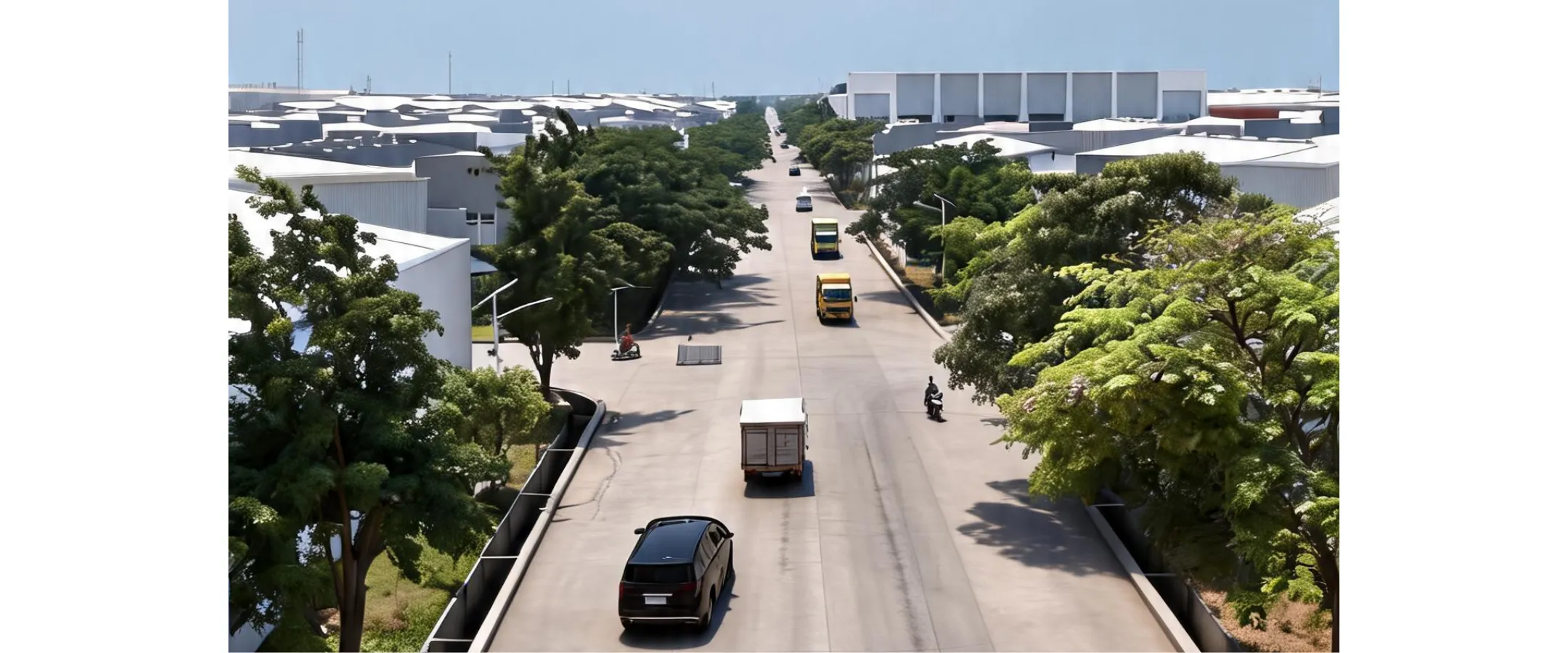
This condition is becoming increasingly relevant for industrial estates in the Tangerang and Jabodetabek corridors. Proximity to the economic center of Jakarta, the toll road network, Soekarno-Hatta International Airport, and the Greater Jakarta distribution network make the time aspect an important part of the company's operational planning.
The management of Laksana Business Park sees that these changes also affect the way business actors assess an industrial estate. According to management, investors are now increasingly paying attention to the region's ability to help companies achieve operational stages more efficiently.
"Regional readiness is one of the factors that can help companies accelerate operational preparation. Investors not only look at the price or land area, but also how the location can support business activities from the beginning," said the management representative of Laksana Business Park.
With the realization of national investment continuing to grow and industrial estate activities continuing to grow, the time-to-market concept is expected to be increasingly relevant in investment decision-making throughout 2026. For companies that are pursuing rapid expansion, industrial estates with ready-made infrastructure and facilities can be one of the options to reduce preparation time while accelerating asset utilization.
At the end of the day, the competition of industrial estates is not only determined by who offers the land at the most competitive price. The ability to provide an ecosystem that supports companies to more quickly build, operate, produce, and distribute products will become an increasingly important part of the value of an industrial estate. (JP)