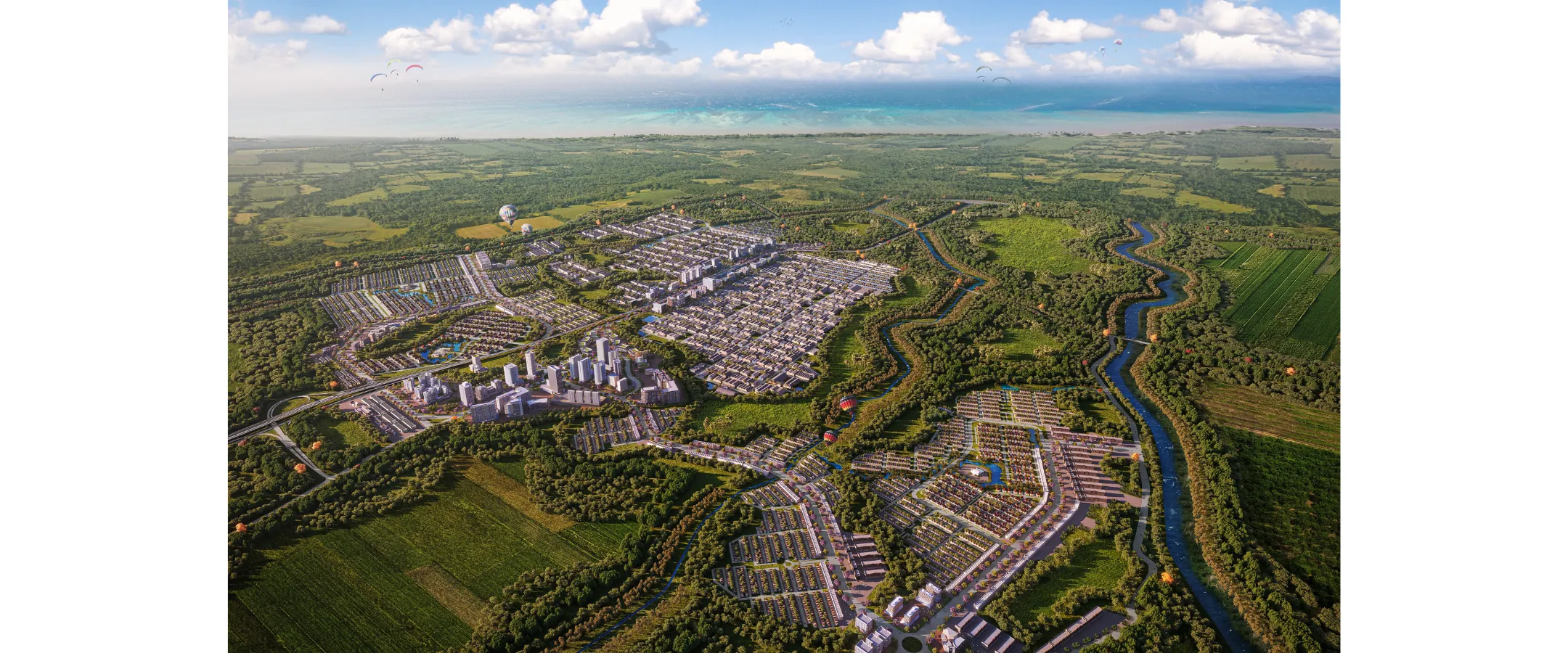
Jakarta, Agung Intiland News - Behind the increasing national industrial and logistics activity, a phenomenon has emerged that has strengthened in recent years: suburban areas are now the main target for business actors. The area previously positioned as a buffer zone is slowly transforming into a new center for industrial and warehousing growth.
Data shows that over 60% of new industrial area development on Java Island is located in peri-urban or metropolitan fringe areas. This shift was triggered by land scarcity in the city center, where industrial land prices continue to rise and space for expansion is becoming increasingly limited. In several core areas of Jabodetabek, industrial land prices have increased by double digits per year, prompting businesses to seek more cost-efficient locations.
Suburban areas offer a increasingly relevant combination for businesses: ample land availability, more competitive acquisition costs, and long-term development flexibility. This becomes crucial, especially for the logistics and distribution sector, which requires large-scale buildings, access for heavy vehicles, and adequate operational maneuvering space.
Infrastructure development is also accelerating changes in the national industrial landscape. The development of national roads, new toll road access, and the strengthening of connectivity to ports and consumption centers are making peripheral areas increasingly integrated with the national logistics network. The distribution time from the suburbs to the main market center is now shorter, so locations outside the city center are no longer seen as an operational barrier.
Additionally, the suburban area provides space for managers to design the area in a more orderly and planned manner. A more modern spatial layout, efficient logistics flow management, and the provision of industrial and warehousing support facilities are added values increasingly sought after by tenants and investors.
From a socio-economic perspective, the presence of industrial areas in the suburban region also has a significant impact. Industrial and warehousing activities contribute to job creation, the growth of supporting service sectors, and increased economic activity at the local level. In many cases, industrial areas become a catalyst for new economic growth in the surrounding regions.
This phenomenon marks a significant shift in the direction of Indonesia's industrialization. Industrial growth is no longer concentrated in major cities, but is spreading to buffer regions that have land readiness and connectivity. Suburban areas are now a strategic part of strengthening the national supply chain and more efficient distribution of goods.
In this context, the industrial and warehousing areas in North Tangerang are starting to receive greater attention. With its proximity to the Jabodetabek consumption center and its location within the western Jakarta logistics corridor, areas like Laksana Business Park are developing in line with this national trend—as part of the suburban areas transforming into modern industrial and distribution hubs, without losing connectivity to major economic activities.
Looking ahead, professionally managed suburban areas that are adaptable to logistics needs and integrated with transportation infrastructure are projected to remain the darlings of the industry, as businesses increasingly require locations that are efficient, sustainable, and ready for long-term growth.
In this context, the presence of industrial and warehousing areas in the northern Tangerang suburbs reflects a new direction in national industrial development. Areas like Laksana Business Park are developing to meet the needs of business owners for locations close to the Jabodetabek market, with efficient logistics access, and designed to support integrated industrial and distribution activities—without compromising environmental and local economic balance. (JP)