Agung Intiland, 06 October 2026
Warehouses Are Getting Full, Companies Are Starting to Look for Alternatives
The Greater Jakarta warehousing market is entering a period with a high level of demand.
The Colliers Quarterly Property Market Report Q1 2026 noted that the occupancy rate of the Greater Jakarta logistics market reached around 95.8% in the first quarter of 2026. This figure has the potential to be close to 99% by the end of the year if demand and supply conditions continue.
Demand does not only come from logistics and e-commerce companies. FMCG, electronics, pharmaceuticals, electric vehicles, and the renewable energy industry also need storage and distribution space.
This condition makes companies need to look at the need for warehouses, not only when the old space is full.
When Warehouses Become Part of Business Strategy
Today's modern warehouse is no longer just a place to store goods.
Warehouses are part of the supply chain that connects raw materials, production, storage, and distribution.
Therefore, the location and specifications of the facility can affect the smooth operation.
Vehicle access, loading and unloading areas, security, utilities, office space, and the regional environment are becoming increasingly relevant for companies that have high distribution activities.
Not All Companies Need the Same Warehouse
The needs of companies vary.
Distribution companies need efficient access in and out of goods. Manufacturing companies need space that can support production and storage processes. Meanwhile, e-commerce or 3PL companies need facilities that are able to handle high-frequency volumes of goods.
Therefore, choosing a warehouse is not enough just based on the area of the building.
Companies need to consider functionality, access, infrastructure, security, utilities, and possible expansion.
Why Is Industrial Estate An Option?
Industrial estates provide a more integrated environment than stand-alone warehouse locations.
Companies can gain access to regional infrastructure, utilities, security, and business environments that are intended for industrial and warehousing activities.
This becomes even more important when companies want to build long-term operations, not just looking for temporary storage.
Tangerang Becomes One of the Alternatives
For companies that serve the Greater Jakarta market, Tangerang has a strategic position because it is connected to Jakarta and various transportation networks.
The proximity to Soekarno-Hatta Airport is also a consideration for companies that need connectivity to distribution networks and air transportation.
In this context, the choice of location is not only about the price or area of the building, but also about how well the location supports the company's activities.
Laksana Business Park
Laksana Business Park is an industrial and warehousing estate in Tangerang that already has an Industrial Estate Business Permit (IUKI).
This area is about 20 minutes from Soekarno-Hatta Airport, with travel times that can vary depending on traffic conditions.
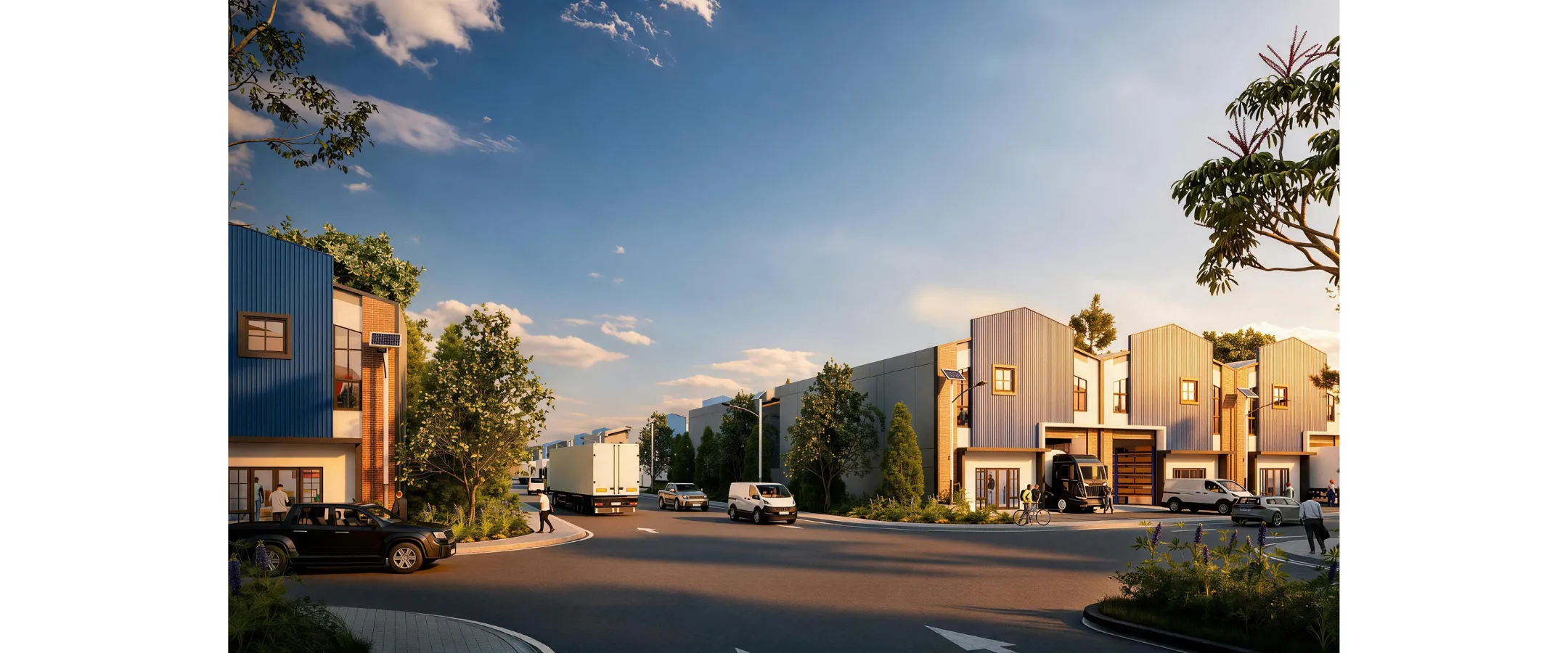
In addition to industrial and warehousing estates, Laksana Business Park also has Luxima, a 4-in-1 property concept that combines warehouses, offices, residences, and business areas in one building.
This concept can be an alternative for business actors who need a space with more practical and integrated functions.
Don't Wait for a Full Warehouse
The high occupancy rate provides one lesson for the company:
Space needs should be planned before capacity is completely exhausted.
Companies that are experiencing growth can start calculating space needs based on production projections, stock quantity, distribution volume, and expansion plans.
With planning ahead, companies have more time to compare locations, facilities, costs, and appropriate ownership models.
Conclusion
The occupancy rate of Greater Jakarta's warehouses which reached 95.8% shows that quality logistics space still has a strong demand. At the same time, industrial estate managers have begun to increase the construction and revitalization of modern warehouses to meet market needs.
For companies that are growing, this condition is a reason to start looking at warehouse needs as part of a long-term operational strategy.
Because when the business grows, waiting for a full warehouse to find a new location can make the options even more limited. (JP)
FAQ
What is the warehouse occupancy rate in Greater Jakarta in 2026?
Necklaces recorded an occupancy rate of around 95.8% in the first quarter of 2026.
What sectors need warehouses in Greater Jakarta?
Demand comes from 3PL, e-commerce, FMCG, electronics, pharmaceuticals, electric vehicles, to the renewable energy industry.
What is a modern warehouse?
Modern warehouse It is a facility designed to support storage and distribution activities with supporting facilities such as vehicle access, loading dock, security, utilities, and operational areas.
Why do companies choose industrial estates?
Areas The industry provides a more integrated environment to support production, storage, distribution, and business activities.
Does Laksana Business Park have IUKI?
Yes. Laksana Business Park already has an Industrial Estate Business License (IUKI).
Reference Source
Colliers Indonesia — Colliers Quarterly Property Market Report Q1 2026: Jakarta Warehouse & Logistics. Data on 95.8% occupancy and supply-demand conditions of the Greater Jakarta logistics market.
Supply Chain Indonesia — JIEP Expands Modern Warehouse in Pulogadung, Aims for Surge in Logistics Demand, October 1, 2026.
Suara.com — Jabodetabek Warehouse Almost Full, JIEP Boosts Expansion in Pulogadung, October 1, 2026.
CBRE — Greater Jakarta Industrial Estate Figures Q2 2026. Data on industrial land development, absorption, prices, and manufacturing-logistics demand.